 EN

 中文简体

How Should a Motorcycle Chain Link Count Be Specified in an Order?
How Should a Motorcycle Chain Link Count Be Specified in an Order?
How Should a Motorcycle Chain Link Count Be Specified in an Order?
How Should a Motorcycle Chain Link Count Be Specified in an Order?
How Should a Motorcycle Chain Link Count Be Specified in an Order?
How Should a Motorcycle Chain Link Count Be Specified in an Order?
How Should a Motorcycle Chain Link Count Be Specified in an Order?
How Should a Motorcycle Chain Link Count Be Specified in an Order?
How Should a Motorcycle Chain Link Count Be Specified in an Order?
How Should a Motorcycle Chain Link Count Be Specified in an Order?
How Should a Motorcycle Chain Link Count Be Specified in an Order?
How Should a Motorcycle Chain Link Count Be Specified in an Order?
How Should a Motorcycle Chain Link Count Be Specified in an Order?
How Should a Motorcycle Chain Link Count Be Specified in an Order?
How Should a Motorcycle Chain Link Count Be Specified in an Order?
How Should a Motorcycle Chain Link Count Be Specified in an Order?

How Should a Motorcycle Chain Link Count Be Specified in an Order?
2026-10-23
A motorcycle chain order can state a size and quantity while leaving the supplied length unclear. It may also mention a joining link without establishing whether that item is included in the stated count. Motorcycle chain link count should therefore be defined as an ordering convention, with the chain reference and joining arrangement shown together.
For aftermarket distributors, kit suppliers and parts importers, the objective is to receive the intended product length and a compatible joining set. This is a procurement and identification task. It does not replace the motorcycle manufacturer's application requirements or the chain manufacturer's fitting instructions.
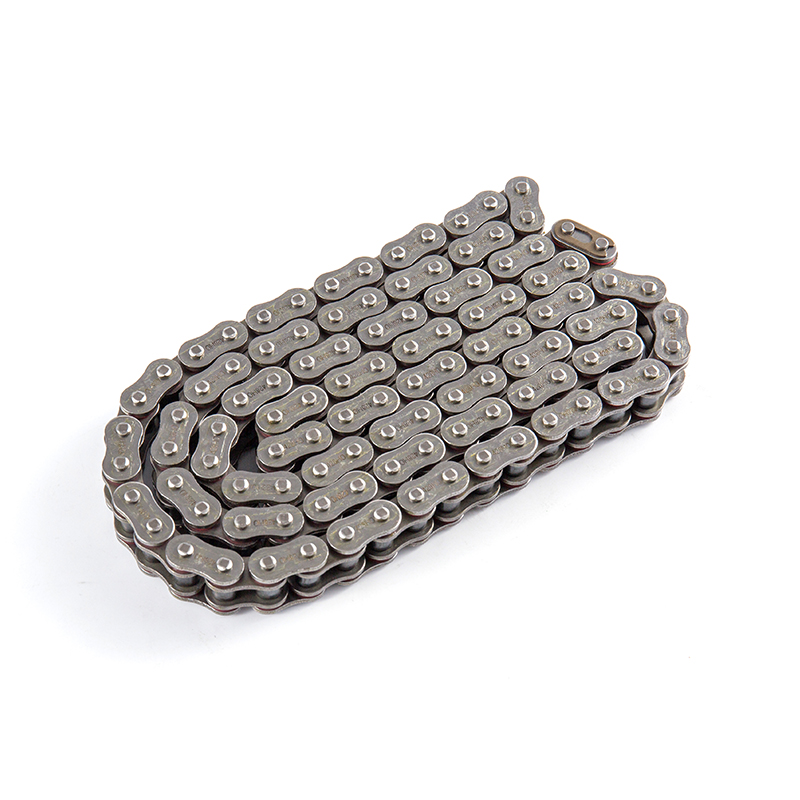
Settle the counting convention
Identify the chain before specifying its length
Start with the complete chain model and size. For sealed motorcycle chains, also record the offered sealing construction and relevant series or version. Chains that share a nominal size should not automatically be treated as equivalent in their application or joining components.
Connect the chain reference with the intended motorcycle or approved parts programme. If the buyer is supplying a replacement kit, retain the application information used to select the chain and sprockets. A link count alone cannot establish vehicle compatibility.
Keep finish and packaging references separate from technical identity. A different colour may be easy to see, while a construction difference may not be obvious from a catalogue image. The purchase order should identify the actual chain rather than rely on a photograph of a similar finish.
Define the motorcycle chain supplied length
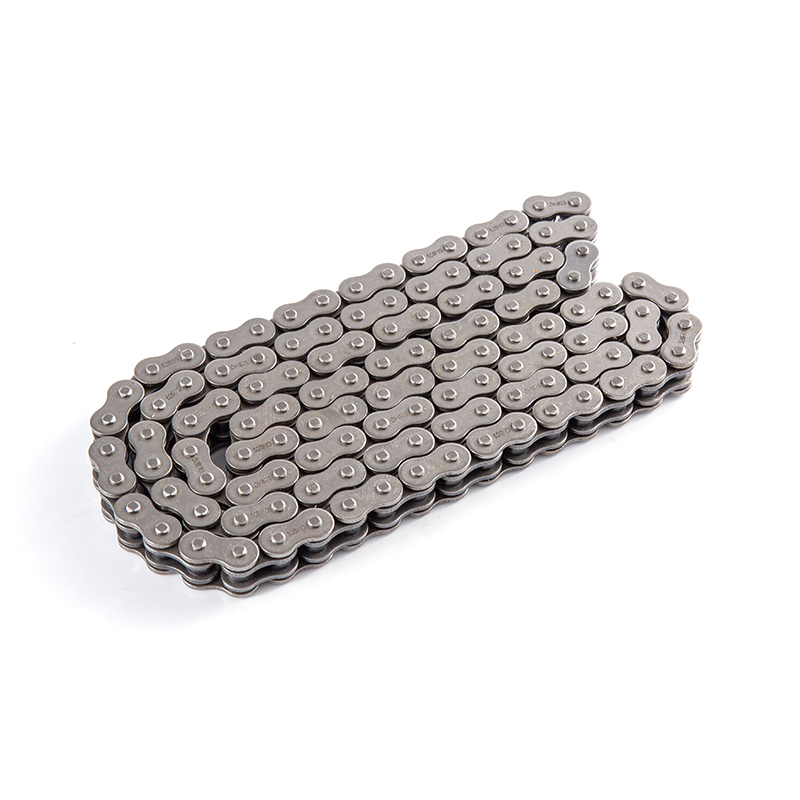
Motorcycle chain supplied length should state whether the product arrives as an open length, a closed loop or another specifically agreed form. Ask how the manufacturer expresses the length and how that description appears on the product label and packing list.
Do not measure the outside perimeter of a loosely folded chain and treat that as an ordered link count. Handling position, articulation and measurement points can make such a record ambiguous. Use the supplier's defined counting and identification method, illustrated where necessary.
If a distributor normally orders stock lengths for later application-specific preparation, state that arrangement clearly. Keep it separate from a claim that the chain is ready for every motorcycle named in a broad catalogue category. The final application and fitting process still require the correct approved information.
Settle the joining-link counting convention
Ask whether the quoted count includes the intended joining link or describes the supplied open chain before that component is fitted. Have the supplier show the convention on a simple labelled diagram or sample record. Both buyer and seller should be able to interpret the same number in the same way.
Use the agreed convention consistently in the quotation, purchase order, carton label and receiving check. If one document states a count including the joining component while another excludes it, resolve the discrepancy before production or packing begins.
Avoid relying on a short message saying standard length. That expression may conceal a supplier assumption about the end configuration or joining set. A controlled model and count record is easier to use when several chain lengths are packed for the same shipment.
Tie the joining set to the order
Specify the motorcycle chain joining set
The motorcycle chain joining set must be approved for the exact chain model and version. Ask which joining arrangement is offered and which components form one complete set. A familiar-looking plate or pin is not evidence of interchangeability with another series.
Record whether the set is supplied in the same retail pack, packed separately or purchased as an additional item. Confirm the quantity per chain and identify any separately ordered spares. Do not assume a joining component is included because it appears beside the chain in a promotional image.
Keep the manufacturer's fitting information with the identified set. Do not publish generic riveting dimensions, clip directions or tool instructions taken from another product. The correct procedure depends on the actual approved joining arrangement and should be followed by appropriately qualified personnel.
Build a consistent order schedule
| Order field | What to record | What it prevents |
|---|---|---|
| Chain identity | Model, size and construction reference | Mixing similar chain series |
| Supplied form | Open length or confirmed closed arrangement | Unclear delivery condition |
| Ordered count | Number and agreed counting convention | Different interpretations of length |
| Joining set | Compatible reference and contents | Unapproved component substitution |
| Pack contents | Chain and accessory quantities | Missing retail components |
| Application record | Approved vehicle or kit reference | Length being treated as complete fit proof |
For a mixed order, give each length and pack configuration its own line. A combined quantity for one chain size can hide several different retail products. Ask how those variants will be distinguished on inner packs and outer cartons.
Use the same convention at receiving
Make receiving checks reflect the order convention
Agree a practical sampling and identification procedure with the supplier. Receiving staff need to know which labels and references establish the model, supplied form and count. Where a physical count is required, use the same approved convention that was used to order the product.
Check joining-set packaging and identification alongside the chain. A correct chain quantity does not resolve a shortage of separately packed compatible joining components. Keep discrepancies by model and lot rather than pooling similar spare pieces into a common bin.
Photographs can help document a mismatch, but retain the packaging and references needed to trace it. If a count or component differs from the order, seek supplier clarification before the product is modified, repacked or allocated to a vehicle-specific kit.
Control changes and repeat purchases
Retain the approved sample, counting diagram and joining-set reference. If the chain model changes, review the compatible joining components again. The same nominal size or finished length does not establish that an older joining set remains suitable.
For repeat orders, state the current part reference and pack contents rather than only asking for the previous shipment. Make any requested changes explicit. This gives the supplier a clear basis for confirming whether the new order matches the retained record.
Send a complete length confirmation request
- Identify the exact chain size, model and construction.
- State the intended supplied form and ordered count.
- Confirm whether the joining component is included in that count.
- List the compatible joining-set reference and quantity.
- Match labels and packing lists to the agreed convention.
- Retain application and fitting information separately from length approval.
A clear count convention connects the quotation to the physical product. Share the intended chain and pack configuration with the supplier before ordering quantities so length, joining components and retail identification can be reviewed as one consistent record.





Copyright © Jiangshan Wangpai Chain Industry Co., Ltd. All Rights
Reserved
 Motorcycle Chain Manufacturer