 EN
EN

 中文简体
中文简体
What Should You Expect From a Roller Chain Manufacturer
What Should You Expect From a Roller Chain Manufacturer
What Should You Expect From a Roller Chain Manufacturer
What Should You Expect From a Roller Chain Manufacturer
What Should You Expect From a Roller Chain Manufacturer
What Should You Expect From a Roller Chain Manufacturer
What Should You Expect From a Roller Chain Manufacturer
What Should You Expect From a Roller Chain Manufacturer
What Should You Expect From a Roller Chain Manufacturer
What Should You Expect From a Roller Chain Manufacturer
What Should You Expect From a Roller Chain Manufacturer
What Should You Expect From a Roller Chain Manufacturer
What Should You Expect From a Roller Chain Manufacturer
What Should You Expect From a Roller Chain Manufacturer
What Should You Expect From a Roller Chain Manufacturer
What Should You Expect From a Roller Chain Manufacturer

What Should You Expect From a Roller Chain Manufacturer
2026-10-02
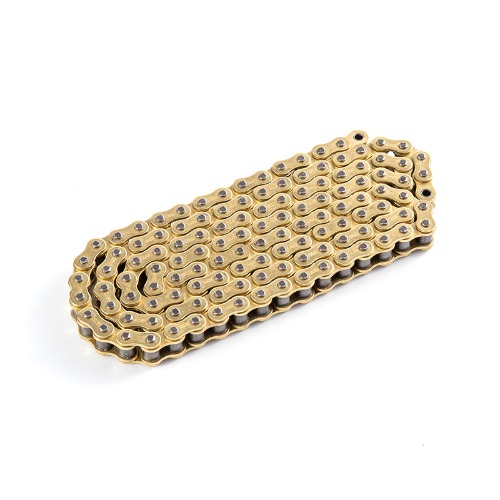
A roller chain may look simple when viewed as an assembled product. Inside the finished chain, however, several metal components have to work together through repeated movement. Chain plates, pins, bushings, and rollers are produced separately before they become part of the same assembly. Their dimensions, material condition, and fit all have a bearing on how the finished chain behaves in equipment.
For buyers, the manufacturing side is often less visible than the finished product. A chain may have the right general size and still require closer attention to component dimensions, material selection, processing, and inspection. This becomes particularly relevant when chains are used in equipment where replacement parts need to fit an existing arrangement without changes to the surrounding components.
A closer look at production can therefore help explain what matters when working with a Roller Chain Manufacturer. Rather than focusing only on the finished chain, it is useful to consider how materials are prepared, how individual parts are made, how they are checked, and how those parts come together during assembly.
How Does a Roller Chain Manufacturer Control Production Quality
Quality control starts with the material entering the factory. If the incoming material has inconsistent properties, later forming, machining, or heat treatment may not produce the same result from one batch to another. Checking material condition before processing gives the production team a reference point.
The individual components then go through their own manufacturing steps. Chain plates may require forming and hole processing. Pins and bushings require dimensional control during machining. Rollers also need to maintain their intended shape so they can move correctly within the assembled chain.
These operations are connected. A problem that begins during forming may only become obvious when parts are assembled. Likewise, a dimensional change during machining can affect the way two components fit together.
For this reason, production checks are normally placed at different points rather than being left until the finished chain is ready to leave the factory.
A production flow may include:
- Checking incoming materials
- Forming or machining individual parts
- Processing selected components
- Checking dimensions during production
- Assembling the links
- Inspecting the finished chain
The purpose is not simply to separate acceptable parts from unacceptable ones. Regular checks can also show when a production process is beginning to change. That information is useful when the same specification needs to be produced repeatedly.
How Are Materials Selected for Roller Chain Components
Not every part of a roller chain works in the same way. A chain plate carries forces through the link, while a pin and bushing are involved in repeated movement between connected parts. The roller has another role because it comes into contact with the equipment during operation.
This is one reason material selection cannot be separated completely from component design.
When selecting materials, manufacturers may consider the type of loading, contact between moving surfaces, expected wear, surrounding conditions, and the processing method required to produce the part. The material also needs to respond appropriately to any later treatment.
For example, a material chosen for a chain plate may need to behave well during forming, while a material used for a pin may need different characteristics because of its contact with another component.
Material consistency matters as well. Two batches that appear similar during basic inspection can respond differently during machining or heat treatment if their material condition varies. Keeping material requirements clearly defined helps reduce this type of variation.
| Component | Production Focus | Typical Concern |
|---|---|---|
| Chain plate | Forming and hole processing | Shape and hole position |
| Pin | Machining and surface preparation | Fit and repeated movement |
| Bushing | Dimensional and surface control | Contact with the pin |
| Roller | Forming and finishing | Rotation and contact |
For a Roller Chain Manufacturer, material selection is therefore tied closely to the way each component is produced. The material cannot be considered separately from forming, machining, treatment, and assembly.
How Does Manufacturing Accuracy Affect Roller Chain Performance
The dimensions of a roller chain are repeated from one link to the next. This makes consistency important. A small variation in one component may not seem significant on its own, but repeated differences can become more noticeable across an assembled chain.
Pitch is one example. The distance between connected elements needs to remain consistent so the chain can engage correctly with the equipment. If that relationship changes along the chain, movement may not remain uniform.
The position of holes in the chain plates is another consideration. Pins pass through these openings during assembly, so changes in hole location can influence how the connected parts sit together.
There is also the fit between components. A pin and bushing are manufactured separately, but they eventually work as a pair. Their individual dimensions and surface conditions need to make sense when considered together.
This is why dimensional inspection should not stop at individual parts. Checking an assembled section can reveal problems that are difficult to see when components are measured separately.
Manufacturing accuracy is therefore less about making one isolated measurement precise and more about keeping the relationships between multiple parts consistent throughout production.
Why Does Heat Treatment Matter in Roller Chain Manufacturing
Some roller chain components need additional processing after they have been formed or machined. Heat treatment is one of the processes that can change the condition of the metal and influence how a component behaves during repeated use.
Pins and bushings, for instance, experience repeated contact and movement. Their material condition can affect how they respond to this contact. Chain plates have a different role and may have different treatment requirements.
The process itself needs to be controlled carefully. Heating and cooling conditions affect the resulting material condition, and changes in that condition can influence hardness and wear behavior.
Heat treatment also needs to fit into the wider manufacturing sequence. A component may require dimensional inspection after treatment because its condition can change during processing. Surface condition may also need to be checked before the part moves into assembly.
A Roller Chain Manufacturer will often treat heat treatment as one stage within a longer production sequence rather than as an independent operation. Material selection, machining, treatment, and inspection need to remain connected.
When problems occur, looking only at the final hardness result may not provide enough information. The earlier material condition and processing steps can also be relevant when identifying why components from different batches behave differently.
What Quality Tests Should a Roller Chain Manufacturer Perform
Inspection gives manufacturers a way to check whether production has stayed within the intended specification. The checks used can vary according to the chain configuration, but they generally cover more than one aspect of the finished product.
Dimensional inspection looks at the physical size and relationship of components. Surface checks can reveal visible marks, burrs, cracks, or other processing issues. Hardness checks may be relevant after heat treatment.
Assembly checks provide another type of information. A component can meet its individual dimensional requirement but still produce an undesirable fit when combined with another part. Checking assembled links helps identify this kind of issue.
Mechanical testing can also be used where the application calls for information about the chain's response under controlled loading.
| Inspection Area | What Is Checked | Production Purpose |
|---|---|---|
| Dimensions | Component size and spacing | Confirms the specified geometry |
| Surface condition | Visible defects and processing marks | Identifies surface-related issues |
| Hardness | Material condition | Checks the result of treatment |
| Assembly | Fit and movement | Checks interaction between parts |
| Mechanical behavior | Response under controlled loading | Provides additional production information |
The timing of inspection matters too. If every check is performed only after assembly, it may be harder to identify where a problem began. Checks during production can narrow down the relevant processing stage.
This also makes production records useful. When a variation appears, the manufacturer can compare inspection results with the relevant material, machining, treatment, or assembly stage.
How Can a Roller Chain Manufacturer Handle Custom Chain Requirements
Standard chain configurations cover many applications, but equipment does not always leave room for a direct replacement. A particular installation may require a different length, attachment arrangement, component dimension, or connection detail.
Custom production starts with clear information.
A drawing is useful when available, but an existing chain can also provide a starting point for measurement. Important dimensions should be recorded rather than estimated from appearance. The installation itself also matters because available space and connection points can influence the required configuration.
Changes to one part can affect another. Extending a pin, for example, may alter the way the chain connects to an attachment. Changing a plate shape can affect forming and assembly. Adding an attachment may require additional processing.
This is why custom chain production should be treated as a complete specification rather than a single altered dimension.
A useful request can include:
- Basic chain dimensions
- Required length
- Connection details
- Attachment requirements
- Installation limitations
- Material preferences
- Working environment
- Inspection requirements
For a Roller Chain Manufacturer, having these details before production begins makes it easier to determine whether the requested configuration can be produced using the intended process.
It also reduces the chance that an apparently small change will create a problem somewhere else in the assembly.
How Do Manufacturers Maintain Consistency Between Production Batches
When a chain is ordered repeatedly, consistency becomes a practical concern. A replacement chain may need to fit equipment that is already in service, so changes in dimensions or assembly condition can create difficulties during installation.
Several parts of production contribute to batch consistency. Materials need to remain within the agreed requirements. Forming tools need to produce parts with stable dimensions. Machining and heat treatment need to follow controlled procedures. Inspection methods also need to remain consistent.
Tooling deserves particular attention because it is used repeatedly. Wear can gradually affect the shape or dimensions of formed components. Without suitable checks, a change may not be noticed until it appears in inspection results or assembled parts.
Production records can help with traceability. If a later batch shows a difference, comparing its material condition, processing steps, tooling condition, and inspection results can help identify where the variation occurred.
Batch consistency is therefore connected to everyday factory practices rather than a single final inspection.
The same principle applies to assembly. If component dimensions remain stable but assembly conditions change, the finished chain can still differ from an earlier production batch.
What Production Details Should Buyers Ask a Roller Chain Manufacturer
A purchasing request becomes easier to evaluate when the technical requirements are clearly stated. Simply identifying a chain by a general size may not provide enough information if the application involves a particular installation arrangement or custom configuration.
The first point to clarify is dimensional compatibility. Buyers can provide measurements from the existing chain or equipment, including relevant connection and installation dimensions.
Material information can then be discussed according to the working conditions. If a particular material or treatment is required, it should be included in the specification rather than left as an assumption.
Inspection requirements are another useful area to discuss. Buyers may want to know which dimensions are checked, whether material condition is inspected, and how the assembled chain is evaluated before shipment.
For custom orders, drawings, samples, photographs, and measurements can provide additional context. A physical sample can be particularly useful when an existing chain needs to be matched, but the sample should still be measured rather than copied by appearance alone.
For repeated orders, buyers can also ask how production consistency is maintained between batches. Information about material control, tooling inspection, process checks, and final inspection can provide a clearer picture of how the specified chain is produced.
The conversation between a buyer and a Roller Chain Manufacturer is therefore not limited to price or delivery. The useful details are often found in the specification itself: what the chain needs to fit, how its components are made, what is checked during production, and which requirements need to remain unchanged from one order to the next.





Copyright © Jiangshan Wangpai Chain Industry Co., Ltd. All Rights
Reserved
 Motorcycle Chain Manufacturer