 EN
EN

 中文简体
中文简体
Why Does a Heavy Duty Drive Chain Matter for Higher-Power Bikes
Why Does a Heavy Duty Drive Chain Matter for Higher-Power Bikes
Why Does a Heavy Duty Drive Chain Matter for Higher-Power Bikes
Why Does a Heavy Duty Drive Chain Matter for Higher-Power Bikes
Why Does a Heavy Duty Drive Chain Matter for Higher-Power Bikes
Why Does a Heavy Duty Drive Chain Matter for Higher-Power Bikes
Why Does a Heavy Duty Drive Chain Matter for Higher-Power Bikes
Why Does a Heavy Duty Drive Chain Matter for Higher-Power Bikes
Why Does a Heavy Duty Drive Chain Matter for Higher-Power Bikes
Why Does a Heavy Duty Drive Chain Matter for Higher-Power Bikes
Why Does a Heavy Duty Drive Chain Matter for Higher-Power Bikes
Why Does a Heavy Duty Drive Chain Matter for Higher-Power Bikes
Why Does a Heavy Duty Drive Chain Matter for Higher-Power Bikes
Why Does a Heavy Duty Drive Chain Matter for Higher-Power Bikes
Why Does a Heavy Duty Drive Chain Matter for Higher-Power Bikes
Why Does a Heavy Duty Drive Chain Matter for Higher-Power Bikes

Why Does a Heavy Duty Drive Chain Matter for Higher-Power Bikes
2026-09-18
A motorcycle's power does not reach the rear wheel directly. It passes through several parts before the rear wheel responds to the rider's throttle input. The drive chain is part of that connection, so changes in engine output can also change the way the chain is used.
This becomes more noticeable when a street motorcycle receives a power upgrade or is ridden in a way that places repeated demands on the drivetrain. Frequent acceleration, quick changes in speed, heavy traffic, and long highway rides can all create different working conditions. A chain that suits one type of riding may not provide the same operating experience under another.
For riders and buyers, the question is therefore not simply whether a chain fits a motorcycle. The condition of the motorcycle, the way it is ridden, the relationship between the chain and sprockets, and the condition of the chain itself all have a place in the decision. A Heavy Duty Drive Chain can be considered when the motorcycle is expected to handle greater or more frequent loads, but the choice still needs to match the complete drivetrain.
How Does Higher Engine Power Increase Drive Chain Load
When engine output increases, more force is transferred toward the rear wheel during acceleration. The drive chain carries this force between the front and rear sprockets, meaning its working conditions can change along with the motorcycle's output.
A power upgrade does not necessarily mean that every part of the drivetrain must be replaced immediately. However, it does change the conditions under which those parts operate. A motorcycle used for calm commuting may place relatively steady demands on its chain, while a modified motorcycle that is frequently accelerated hard can create more sudden changes in load.
The difference can be considered through several everyday situations:
- Smooth acceleration creates a gradual transfer of power.
- Hard acceleration places a more sudden demand on the chain.
- Frequent changes in speed create repeated changes in load.
- Aggressive riding can increase the frequency of these changes.
This is one reason chain selection should be considered together with the motorcycle's actual use. The engine's output is only one part of the picture. How that output reaches the rear wheel also matters.
A Heavy Duty Drive Chain is therefore relevant not simply because a motorcycle has more power, but because the chain may be expected to work under a different pattern of loading.
Which Motorcycle Riding Conditions Put More Stress on the Chain
The same motorcycle can place very different demands on its chain depending on where and how it is ridden. A street motorcycle used mainly for steady commuting has a different operating pattern from one that regularly experiences rapid acceleration or extended highway riding.
Stop-and-go traffic is one example. Repeated starts require the drivetrain to respond again and again as the motorcycle moves away from a standstill. On an open road, the motorcycle may instead spend longer periods moving at a relatively consistent speed.
Riding style also matters. Two riders using the same motorcycle may produce different chain wear simply because their acceleration and shifting habits are different.
| Riding condition | Possible effect on chain use |
|---|---|
| Frequent stops and starts | Repeated changes in load |
| Hard acceleration | Greater sudden force during power transfer |
| Steady highway riding | Longer periods of continuous operation |
| Mixed urban and road riding | Frequent changes between operating conditions |
| Power-upgraded riding | Greater demands during acceleration |
Weather and road conditions can also influence maintenance needs. Water, dirt, dust, and road debris can reach the chain during normal riding. If these contaminants remain on the chain, they can affect movement and contribute to wear over time.
For this reason, the riding environment should be considered alongside engine output. A chain used on a motorcycle with moderate power may still require regular attention if it spends much of its time in demanding traffic or poor road conditions.
What Chain Specifications Matter for Higher-Power Motorcycles
Once the motorcycle's operating conditions are clear, the next consideration is whether the chain matches the drivetrain. Size and fit are important because the chain needs to work correctly with the motorcycle's front and rear sprockets.
A chain should not be selected simply because it is described as heavy duty. The motorcycle's required chain size, sprocket compatibility, available clearance, and intended use still need to be considered.
The basic points to check include:
- The chain size required by the motorcycle
- Compatibility with the existing sprockets
- Space available around the drivetrain
- The motorcycle's intended riding conditions
- Whether the drivetrain has been modified
A power upgrade can make this assessment more important. If the engine has been modified, the original drivetrain setup may no longer represent the motorcycle's current operating conditions.
The chain and sprockets also need to work as a complete set. A suitable chain cannot compensate for poor compatibility elsewhere in the drivetrain. For a higher-power motorcycle, checking the complete setup helps prevent a situation where one component is considered separately from the parts it works with.
How Does Hard Acceleration Affect Heavy Duty Drive Chain Wear
Acceleration is one of the clearest moments when the chain experiences a change in working conditions. When the rider opens the throttle quickly, the chain must respond to the resulting increase in force.
Repeated hard acceleration can gradually affect the condition of the chain. The issue is not one isolated acceleration event. Rather, repeated changes in load can influence how quickly wear becomes noticeable, especially when maintenance or adjustment is neglected.
Wear may appear in different ways. The chain may develop uneven movement, the amount of slack may change, or the motorcycle may feel less consistent during power delivery. These signs do not always point to the chain alone, since the sprockets and adjustment can also play a role.
A Heavy Duty Drive Chain can be considered for motorcycles that regularly experience stronger acceleration, but its use does not remove the need for appropriate maintenance. Cleaning, lubrication, tension checks, and sprocket inspection remain relevant regardless of the chain's intended load range.
The rider's habits therefore have a direct relationship with chain condition. Smooth use and regular care can produce a different wear pattern from repeated aggressive acceleration combined with limited maintenance.
Why Do Drive Chain and Sprocket Wear Often Occur Together
The chain and sprockets are designed to work together. Every time the motorcycle moves, the chain engages with the teeth of the sprockets. As a result, changes in one part can affect the working condition of the other.
A worn sprocket may no longer engage with the chain in the same way as a properly maintained sprocket. In turn, an aging chain can affect how the sprocket teeth are used. This is why replacing only one part without checking the others can leave an underlying issue unaddressed.
The relationship can be viewed simply:
Engine output → front sprocket → chain → rear sprocket → rear wheel
Each connection has a role in transferring movement. If the chain is changed while worn sprockets remain in place, the new chain will still operate against those existing components.
When inspecting a Heavy Duty Drive Chain, the sprockets should therefore receive attention as well. Uneven tooth wear, unusual chain movement, or visible differences between parts can indicate that the drivetrain needs a closer inspection.
This approach is also useful when a motorcycle has received modifications. A change in engine output may make the condition of the complete chain-and-sprocket setup more important than looking at the chain in isolation.
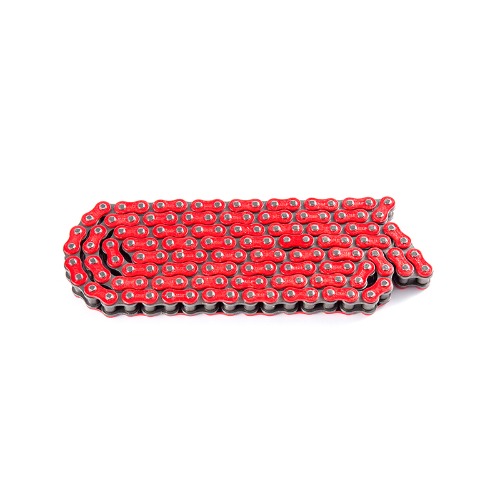
How Does Chain Tension Affect Power Transfer and Wear
Chain tension affects how the chain moves between the front and rear sprockets. If the chain is too loose, it can move excessively during operation. If it is too tight, the drivetrain may operate under unnecessary strain.
Neither condition is desirable for regular motorcycle use. The appropriate setting depends on the motorcycle and its drivetrain arrangement, so adjustments should follow the vehicle's specified requirements rather than a general assumption.
A loose chain may produce noticeable movement or noise, particularly when the rider changes speed. A chain that is too tight can also create unusual operating behavior and may increase stress on connected parts.
Tension can change through normal use as the chain wears. It can also vary if adjustment is not performed correctly. Checking the chain at regular intervals is therefore more useful than adjusting it only after a problem becomes obvious.
For a Heavy Duty Drive Chain used on a higher-power motorcycle, correct tension remains important. A chain designed for demanding use still needs enough freedom to move properly while remaining controlled during acceleration and changes in speed.
What Signs Show That a Heavy Duty Drive Chain Needs Attention
Chain condition can often be assessed through ordinary inspection and riding observations. A change in how the motorcycle sounds or responds may provide an early indication that the drivetrain should be checked.
Some signs are easier to notice than others:
- The chain develops noticeable slack changes.
- Certain sections appear tighter than others.
- Unusual noise occurs during acceleration.
- The chain does not move smoothly around the sprockets.
- Visible rust, dirt buildup, or damaged parts appear.
- Sprocket teeth show unusual wear.
- Chain adjustment becomes necessary more frequently.
One sign by itself does not always identify the cause. For example, unusual noise may be related to chain tension, sprocket condition, lubrication, or another drivetrain component.
The useful approach is to consider several observations together. If a motorcycle has recently received a power upgrade and begins showing changes in chain behavior, checking the complete drivetrain can help identify whether the current setup remains appropriate.
Regular inspection also provides a better opportunity to notice gradual changes before they become more disruptive to normal riding.
When Should a Street Motorcycle Use a Heavy Duty Drive Chain
There is no single riding condition that automatically requires a Heavy Duty Drive Chain. The decision depends on the motorcycle, its drivetrain configuration, its power level, and how it is used.
For a standard street motorcycle used mainly for ordinary commuting, the original chain specification may remain appropriate when it is properly matched to the vehicle. The situation can be different when the motorcycle has been modified or is regularly subjected to stronger acceleration and changing loads.
A few situations deserve closer consideration:
| Motorcycle use | Points to consider |
|---|---|
| Daily street commuting | Traffic conditions, maintenance, and regular adjustment |
| Highway riding | Continuous operation and inspection after extended trips |
| Frequent hard acceleration | Repeated changes in chain loading |
| Power-upgraded motorcycle | Current drivetrain compatibility and chain condition |
| Mixed road use | Different riding conditions throughout normal use |
The key is to look beyond the chain itself. A suitable drivetrain requires compatibility between the chain, sprockets, motorcycle setup, and riding conditions. Power upgrades can change the demands placed on these components, while riding habits and maintenance influence how those demands develop over time.
For higher-power street and road motorcycles, the chain becomes part of the wider question of how engine output is transferred to the rear wheel. Considering load, riding conditions, fit, acceleration, sprocket condition, tension, and visible wear provides a more practical basis for deciding whether a heavy-duty option suits the motorcycle's current use.





Copyright © Jiangshan Wangpai Chain Industry Co., Ltd. All Rights
Reserved
 Motorcycle Chain Manufacturer