 EN
EN

 中文简体
中文简体
How Can a Roller Chain Supplier Identify an Unknown Chain
How Can a Roller Chain Supplier Identify an Unknown Chain
How Can a Roller Chain Supplier Identify an Unknown Chain
How Can a Roller Chain Supplier Identify an Unknown Chain
How Can a Roller Chain Supplier Identify an Unknown Chain
How Can a Roller Chain Supplier Identify an Unknown Chain
How Can a Roller Chain Supplier Identify an Unknown Chain
How Can a Roller Chain Supplier Identify an Unknown Chain
How Can a Roller Chain Supplier Identify an Unknown Chain
How Can a Roller Chain Supplier Identify an Unknown Chain
How Can a Roller Chain Supplier Identify an Unknown Chain
How Can a Roller Chain Supplier Identify an Unknown Chain
How Can a Roller Chain Supplier Identify an Unknown Chain
How Can a Roller Chain Supplier Identify an Unknown Chain
How Can a Roller Chain Supplier Identify an Unknown Chain
How Can a Roller Chain Supplier Identify an Unknown Chain

How Can a Roller Chain Supplier Identify an Unknown Chain
2026-09-04
When an existing chain needs to be replaced but its original model is no longer known, the identification process can become less straightforward than expected. A worn chain may still look familiar, while small differences in size can affect whether a replacement fits the existing equipment. Relying only on appearance can therefore create uncertainty during purchasing.
An unknown chain does not necessarily require a complete equipment manual or an old purchase record to be identified. Information from the chain itself can provide a useful starting point. Photos, measurements, the condition of the old chain, and details about the equipment can all help narrow down the possible specification.
The role of a Roller Chain Supplier in this process is not simply to receive an order. Clear communication between the buyer and supplier can help turn incomplete information into a specification that can be checked before replacement. The process usually begins with gathering what is already available, followed by measurement, comparison, sample verification, and confirmation with the related sprocket.
What Chain Information Should You Send to a Roller Chain Supplier
The identification process is easier when the supplier receives more than a general description such as "a standard chain" or "the chain from our conveyor." Such descriptions may explain the application, but they do not provide enough information to distinguish between similar products.
A useful starting package can include:
- Clear photos of the complete chain and individual links
- Measurements taken from an undamaged section
- The number or marking found on the chain, if any
- A photo of the sprocket where the chain is installed
- Information about the equipment in which the chain is used
- The required replacement quantity and chain length
The condition of the old chain also matters. A heavily worn chain may have changed slightly from its original dimensions, so measurements taken from several areas can provide a clearer picture than measuring a visibly damaged section.
If an old purchase record, drawing, packaging label, or previous quotation is available, it can also be sent for reference. These records should be treated as supporting information rather than assumed to be correct without checking the physical chain.
The more clearly the available information is organized, the easier it is for a Roller Chain Supplier to compare the description with the physical product. This also reduces unnecessary back-and-forth during the identification stage.
How Can a Supplier Identify a Roller Chain From Its Dimensions
Dimensions provide a practical way to identify a chain when its original designation is missing. The process starts with measurements from sections that have experienced less wear. A supplier can then compare those measurements with the characteristics of possible chain types.
A single measurement is rarely enough. Several dimensions need to be considered together because chains that look similar may differ in ways that are not immediately visible.
When measuring an existing chain, the chain should be placed in a stable position rather than pulled at an unusual angle. A loose or damaged chain can give inconsistent readings. It is also useful to avoid using a section with bent components or obvious deformation.
The following information can help organize the measurement process:
| Information to Check | Why It Matters |
|---|---|
| Distance between adjacent connection points | Helps distinguish between chain sizes |
| Width of the chain | Provides another reference for specification matching |
| Diameter of the rolling component | Helps separate similar-looking options |
| Overall condition | Indicates whether wear may affect measurements |
| Existing chain length | Helps with replacement planning |
These measurements do not need to be interpreted in isolation. A supplier can compare them as a group and identify whether the physical chain corresponds with a known specification.
This is particularly useful when the chain has been in service for a long time. Surface wear, stretching, corrosion, or deformation can make an old component appear different from its original condition. Comparing several measurements can help separate normal wear from a fundamentally different specification.
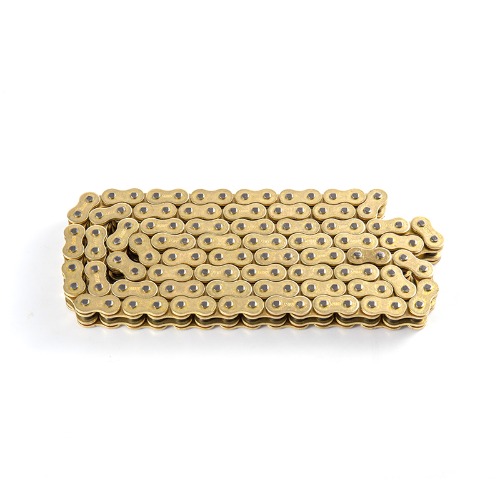
Which Roller Chain Dimensions Need to Be Checked Before Ordering
Once the initial identification has been made, the next step is to verify the dimensions before an order is placed. This stage is important because an apparently correct identification can still contain an overlooked detail.
The chain should be checked in a clean and relatively undamaged area. If possible, measurements can be compared across different sections. When the results vary significantly, the difference may be related to wear or damage rather than the original design.
Particular attention should be given to dimensions that affect the way the chain engages with the sprocket. Width is also relevant because the available space in the equipment can limit which chain can be installed.
It is useful to keep the measurement record together instead of sending isolated numbers in separate messages. A simple specification sheet or annotated photograph can make communication clearer.
For example, the buyer can mark each measurement directly on a photograph of the chain and identify which section was measured. This gives the supplier a visual reference and reduces the chance of confusing one dimension with another.
The same principle applies when replacing a chain that has already been removed from the machine. Even though the equipment is no longer available for a direct fit check, the old chain can still provide useful physical evidence.
Why Can the Same Roller Chain Size Have Different Specifications
A common source of confusion is the assumption that two chains with similar dimensions must be interchangeable. In practice, similar external appearances do not necessarily mean that every specification is identical.
Differences can exist in the construction, component dimensions, material selection, manufacturing requirements, or intended operating conditions. Some differences may be difficult to identify from a photograph, particularly when the chains are new and have a similar surface appearance.
This is why identification should not rely on visual comparison alone.
Consider a replacement situation in which an old chain is compared with a new sample. If the outside appearance is similar but the fit around the existing sprocket is different, the replacement may not work as expected. The issue may not be visible until the components are placed together.
Another point is the condition of the old chain. A used chain can become elongated or worn at contact areas. Comparing its worn dimensions directly with an unused chain may therefore produce a misleading result.
The identification process should separate three things:
- What the original chain was designed to be
- What condition the existing chain is currently in
- What specification the replacement needs to match
Keeping these questions separate makes the purchasing process more precise. It also gives the supplier a clearer basis for checking whether the proposed replacement corresponds to the existing application.
When Should You Send a Sample to a Roller Chain Supplier
A physical sample becomes particularly useful when the model marking is missing, the measurements are uncertain, or several possible specifications appear similar.
A sample does not necessarily need to be an entire chain. A representative section containing several connected parts may provide useful information, provided it is intact and has not been severely damaged.
Before sending a sample, the buyer should avoid modifying it unnecessarily. Cutting, bending, cleaning aggressively, or removing components can eliminate information that may help with identification.
Photos should still accompany the sample when practical. They can show how the chain was installed, how it engaged with the sprocket, and whether unusual wear occurred in service.
Sample identification can be especially useful when an old chain has been stored for a long period and the original purchasing information is unavailable. The physical component provides a reference that written descriptions cannot always reproduce.
However, a sample should not automatically be treated as proof that the replacement is suitable for every application. The equipment conditions and sprocket should still be considered before the final specification is confirmed.
How Does a Roller Chain Supplier Verify Chain and Sprocket Compatibility
Identifying the chain is only part of the replacement process. The sprocket already installed on the equipment can provide another useful reference.
The chain and sprocket work together, so their dimensions need to correspond. If a replacement chain is selected without checking the existing sprocket, a specification error may remain unnoticed until installation.
The sprocket can be examined for visible wear, damage, or an unusual engagement pattern. The old chain can also provide clues about how it interacted with the sprocket during operation.
A basic compatibility check can consider:
| Check Area | What to Observe |
|---|---|
| Chain engagement | Whether the chain sits correctly on the sprocket |
| Sprocket condition | Whether the teeth show obvious wear or damage |
| Chain width | Whether the chain fits the available sprocket space |
| Chain movement | Whether movement appears smooth during manual checking |
| Existing arrangement | Whether the replacement matches the current setup |
If the sprocket is significantly worn, simply replacing the chain may not address the underlying fit issue. Likewise, changing the chain specification without considering the existing sprocket can introduce a new mismatch.
For this reason, photographs of both components can be helpful when discussing an unknown chain with a supplier. They provide more context than a chain photo alone.
What Should You Check Before Approving a Roller Chain Sample
Once a sample has been prepared, the buyer should compare it with the existing chain and equipment before approving the replacement specification.
The first check is physical fit. The sample should correspond with the available space and engage with the existing sprocket as expected. If installation requires unusual force or the chain does not sit correctly, the specification should be reviewed before moving forward.
The second check is dimensional consistency. Measurements from the sample can be compared with the previously recorded measurements of the old chain. Small differences should be investigated rather than ignored, particularly when the original chain is still available for comparison.
The third check is the condition of the sample itself. The components should be inspected for visible damage, deformation, or other irregularities that could affect the verification process.
It is also useful to keep photographs of the approved sample together with the confirmed specification. This creates a reference for later purchasing and can help prevent confusion when several similar chains are used in the same facility.
A careful sample approval process does not need to be complicated. Its main purpose is to ensure that the physical product, recorded dimensions, and intended application all point to the same specification.
How Can You Prevent Roller Chain Specification Errors in Bulk Orders
After an unknown chain has been identified, the information should be recorded in a form that can be reused. This becomes particularly important when the same replacement is purchased again or when several similar chains are used across different machines.
A simple record can include the confirmed chain specification, related dimensions, sample photographs, equipment location, sprocket information, and previous order details. Keeping these items together makes later identification less dependent on memory.
Before a larger order is released, the recorded specification should be compared with the approved sample. The quantity and required length should also be checked separately from the product specification.
For orders containing several chain sizes, each item should have its own clear identification. Mixing specifications within a single request can make it difficult to determine which dimensions belong to which product.
A practical checking sequence is:
- Match the order description with the approved specification
- Compare the specification with the retained sample information
- Check chain length and required quantity
- Confirm that different chain sizes are clearly separated
- Keep the final approved information for future orders
This approach also helps when the original machine operator or purchasing contact changes. A well-kept specification record gives the next person a physical and written reference instead of requiring the chain to be identified again from the beginning.
When a replacement chain has no clear model information, careful identification is more reliable than choosing a similar-looking product. Measurements, photographs, samples, equipment information, and sprocket checks can work together to establish a clear specification before an order is confirmed. For businesses handling chain identification and replacement requirements, the same process can provide a practical basis for communication and order records, with Jiangshan Wangpai Chain Industry Co., Ltd. being one company associated with roller chain manufacturing and related supply needs.





Copyright © Jiangshan Wangpai Chain Industry Co., Ltd. All Rights
Reserved
 Motorcycle Chain Manufacturer