 EN
EN

 中文简体
中文简体
Why Does a Heavy Duty Motorcycle Chain Develop Tight Spots
Why Does a Heavy Duty Motorcycle Chain Develop Tight Spots
Why Does a Heavy Duty Motorcycle Chain Develop Tight Spots
Why Does a Heavy Duty Motorcycle Chain Develop Tight Spots
Why Does a Heavy Duty Motorcycle Chain Develop Tight Spots
Why Does a Heavy Duty Motorcycle Chain Develop Tight Spots
Why Does a Heavy Duty Motorcycle Chain Develop Tight Spots
Why Does a Heavy Duty Motorcycle Chain Develop Tight Spots
Why Does a Heavy Duty Motorcycle Chain Develop Tight Spots
Why Does a Heavy Duty Motorcycle Chain Develop Tight Spots
Why Does a Heavy Duty Motorcycle Chain Develop Tight Spots
Why Does a Heavy Duty Motorcycle Chain Develop Tight Spots
Why Does a Heavy Duty Motorcycle Chain Develop Tight Spots
Why Does a Heavy Duty Motorcycle Chain Develop Tight Spots
Why Does a Heavy Duty Motorcycle Chain Develop Tight Spots
Why Does a Heavy Duty Motorcycle Chain Develop Tight Spots

Why Does a Heavy Duty Motorcycle Chain Develop Tight Spots
2026-08-28
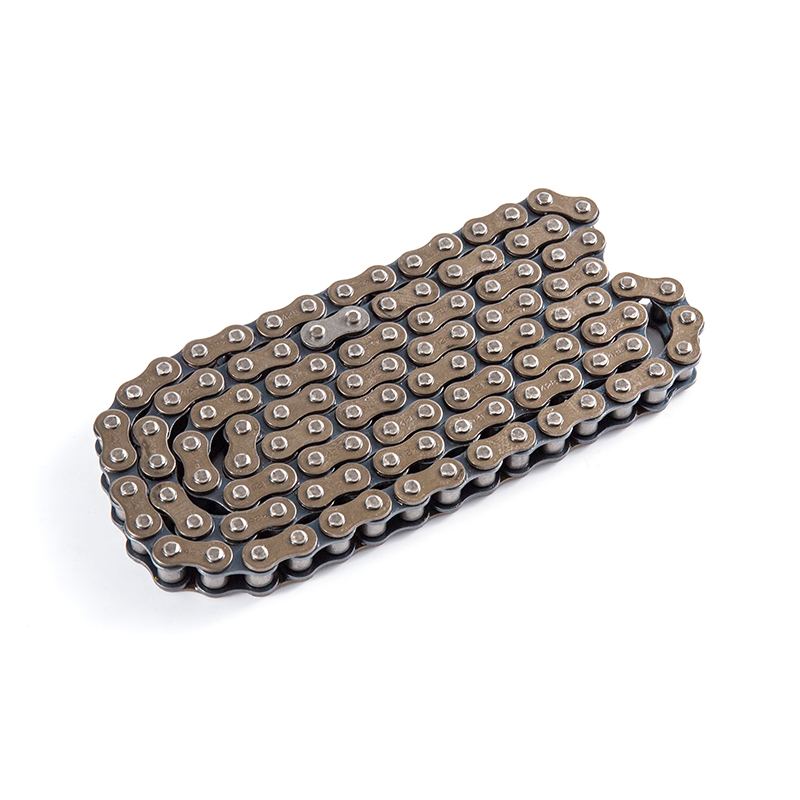
A chain can look fine at a glance and still behave differently from one section to another. Rotate the rear wheel, however, and a section that was loose may become noticeably tighter. In some cases, one or two links may also feel reluctant to bend. This is commonly described as a tight spot.
The condition is not always caused by one issue. Wear inside the links, poor lubrication, sprocket condition, alignment, and chain adjustment can all play a part. The way a motorcycle is used also matters. Frequent acceleration, rough surfaces, dust, mud, and long periods between maintenance can leave different sections of the chain in different conditions.
That makes diagnosis more useful than simply adjusting the tension. A tighter setting may hide the change in slack at one position while leaving the underlying problem untouched. Looking at the chain, sprockets, and movement together gives a clearer picture of what is happening.
What Causes Tight Spots in a Heavy Duty Motorcycle Chain
A tight spot means that chain tension changes as the chain moves around the sprockets. One section may have reasonable movement, while another feels noticeably tighter.
Some variation can develop as the chain wears. Each link bends repeatedly when it travels around the front and rear sprockets. The connected parts move against one another during this process, and wear does not always occur evenly.
A few common conditions are worth checking:
- Links that do not bend freely
- Uneven lubrication along the chain
- Dirt collected around moving parts
- Worn sprocket teeth
- Incorrect chain adjustment
- Sprockets that are not properly aligned
The location of the tight spot can also provide a clue. If the same section repeatedly becomes tight as the wheel turns, the issue may be connected with particular links rather than overall chain adjustment.
It is also possible for more than one condition to exist at the same time. For example, an aging chain may already have uneven wear, while inadequate lubrication makes the stiff sections easier to notice.
For that reason, changing the tension without checking the rest of the drivetrain is not always enough.
How Do Worn Pins Create Tight Chain Links
The pins connecting the chain links have a demanding job. Every time the chain bends around a sprocket, the connected parts move relative to each other. That movement is repeated throughout normal riding.
Wear around these contact areas can gradually change how freely a link moves. A worn section does not necessarily look damaged from the outside. Sometimes the clearest sign is simply that one link does not bend as easily as the links beside it.
This is where a tight spot can develop.
Imagine rotating the wheel by hand and checking the chain every short section. Most of the links move with little resistance, but one area feels stiff. Rotate the wheel again and the same area reaches the sprocket. If the tight section returns to the same location each time, individual link condition becomes worth investigating.
Uneven wear can also affect several neighboring links. Dirt, lubricant condition, riding conditions, and the way load is applied may differ over time, so every part of the chain does not necessarily age in exactly the same way.
A stiff link should not simply be treated as a tension problem. Adjustment changes the position of the chain, but it does not restore normal movement to a link that has become restricted.
Can Poor Lubrication Cause Heavy Duty Motorcycle Chain Tight Spots
Lubrication is easy to overlook because a chain may still look reasonably clean while the moving areas are no longer adequately lubricated.
Inside the connected sections, movement takes place whenever the chain bends. If lubrication becomes insufficient, friction at these contact points can increase. Over time, movement may become less smooth, particularly in areas exposed to dust and road contamination.
The problem can become more noticeable after riding through dirty or wet conditions. Small particles can collect around the chain and combine with old lubricant. Instead of helping the moving parts, the buildup can interfere with their movement.
A few signs can point toward lubrication or contamination:
- A previously flexible link feels stiff
- The chain becomes noisier during operation
- Dirt is visible around the link areas
- Movement improves temporarily after cleaning and lubrication
That last point is useful when diagnosing the problem. If cleaning and appropriate lubrication make a stiff section move more freely, contamination may have contributed to the issue. If the link remains restricted, mechanical wear deserves more attention.
Lubrication should therefore be considered alongside the physical condition of the chain rather than as a replacement for inspection.
How Does Sprocket Misalignment Affect Chain Movement
The chain follows the path set by the sprockets. If the front and rear sprockets are not positioned correctly in relation to each other, the chain may run at an angle instead of following a consistent line.
At first, the change may be difficult to notice. The motorcycle may still operate normally, but the chain can experience uneven side contact as it moves. Over time, that irregular movement may contribute to wear in particular areas.
A tight spot caused by another problem can also become more noticeable when alignment is poor. This is why checking alignment is useful when a chain continues to show uneven movement after adjustment.
Look for signs such as:
| Observation | Area worth checking |
|---|---|
| Chain moves sideways while rotating | Sprocket alignment |
| Wear appears heavier on one side | Chain and sprocket position |
| Chain does not settle smoothly on teeth | Sprocket condition |
| Tight section repeatedly appears | Link condition and alignment |
Alignment should be checked as part of the overall inspection rather than viewed as an isolated maintenance task. A new chain running on a poorly aligned setup can develop similar problems again.
How Does Uneven Chain Tension Lead to Tight Spots
Chain tension changes naturally as the drivetrain rotates, but a large difference between sections deserves attention.
A chain that is adjusted too tightly has less room for normal movement. It can also place additional pressure on the chain and sprockets. Excessive slack creates a different problem. The chain has more freedom to move and may not remain as controlled around the sprockets.
There is another complication: a chain that already has tight spots can make adjustment more difficult.
If the chain is checked only at its loosest position, an adjustment may leave the tighter section under excessive tension. If it is adjusted according to the tightest position, another section may end up with more slack than intended.
That is why the chain should be rotated during inspection rather than checked at one fixed point.
The important distinction is between uneven tension caused by adjustment and uneven tension caused by chain wear. The former may respond to proper adjustment. The latter usually remains because the physical condition of the links has changed.
Why Can Worn Sprockets Affect Heavy Duty Motorcycle Chain Movement
The chain does not operate independently of the sprockets. Every link repeatedly engages with the teeth, and the condition of those teeth affects how smoothly the chain travels.
As sprocket teeth wear, their shape can change. The chain may no longer engage and release in quite the same way as it did when the teeth were in better condition. That change can be felt as rough movement, additional noise, or inconsistent chain behavior.
A worn sprocket can also make an existing chain problem harder to diagnose. The chain may have some worn links, while the sprocket adds another source of irregular movement.
| Chain behavior | Sprocket condition to inspect |
|---|---|
| Uneven engagement | Changes in tooth shape |
| Repeated noise | Worn contact surfaces |
| Rough movement | Irregular tooth wear |
| Chain does not sit smoothly | Damaged or worn teeth |
This is why checking the chain alone can give an incomplete answer. If the sprockets show obvious wear, their condition should be considered before deciding whether the chain itself is the only problem.
Replacing one component while leaving a badly worn mating component in service may also affect how the replacement part runs.
How Can Uneven Chain Tension Be Checked
A simple visual check at one point on the chain does not tell the whole story. The wheel needs to be rotated so that different sections can be observed.
Watch how the chain moves as it travels around the sprockets. Does the slack change significantly? Does one section become tight at the same point during each rotation? Are any links reluctant to bend?
It is also worth looking at the sprocket engagement while the chain is moving. A section that does not sit or release smoothly may point toward a problem beyond simple tension.
A practical inspection can follow this order:
- Rotate the wheel and observe changes in slack.
- Check individual links for restricted movement.
- Look over the sprocket teeth for uneven wear.
- Check for dirt and signs of inadequate lubrication.
- Inspect alignment if the problem continues.
The condition should be checked more than once if the result is unclear. A tight spot that repeatedly appears at the same location provides more useful information than a single observation.
If the chain feels different after cleaning and lubrication, note the change. If nothing changes, the inspection should move toward wear, alignment, and sprocket condition.
When Should Tight Spots Lead to Chain Replacement
A tight spot does not automatically mean that a chain needs to be replaced. The surrounding condition matters.
A slightly stiff section may have a different cause from a link that can barely move. Likewise, a chain with uneven tension but otherwise free-moving links presents a different situation from one with several restricted sections and visible wear.
More attention is warranted when:
- Tight spots remain after cleaning and lubrication
- Individual links cannot move freely
- Uneven wear is clearly visible
- The chain repeatedly produces abnormal noise
- Sprocket teeth also show significant wear
- Adjustment does not correct the changing tension
The relationship between the chain and sprockets should be considered before a replacement decision is made. If both parts have developed wear, replacing only the chain may not address the conditions that caused the uneven movement.
A recurring tight spot is therefore useful as a warning sign. It indicates that the chain deserves a closer look rather than another adjustment without inspection. Checking the links, lubrication, sprockets, alignment, and tension together makes it easier to determine whether the issue is temporary or related to physical wear.





Copyright © Jiangshan Wangpai Chain Industry Co., Ltd. All Rights
Reserved
 Motorcycle Chain Manufacturer