 EN
EN

 中文简体
中文简体
How Can Distributors Manage Different Motorcycle Chain Sizes
How Can Distributors Manage Different Motorcycle Chain Sizes
How Can Distributors Manage Different Motorcycle Chain Sizes
How Can Distributors Manage Different Motorcycle Chain Sizes
How Can Distributors Manage Different Motorcycle Chain Sizes
How Can Distributors Manage Different Motorcycle Chain Sizes
How Can Distributors Manage Different Motorcycle Chain Sizes
How Can Distributors Manage Different Motorcycle Chain Sizes
How Can Distributors Manage Different Motorcycle Chain Sizes
How Can Distributors Manage Different Motorcycle Chain Sizes
How Can Distributors Manage Different Motorcycle Chain Sizes
How Can Distributors Manage Different Motorcycle Chain Sizes
How Can Distributors Manage Different Motorcycle Chain Sizes
How Can Distributors Manage Different Motorcycle Chain Sizes
How Can Distributors Manage Different Motorcycle Chain Sizes
How Can Distributors Manage Different Motorcycle Chain Sizes

How Can Distributors Manage Different Motorcycle Chain Sizes
2026-08-21
For distributors, handling motorcycle chains is not simply a matter of keeping products on shelves. Different motorcycles can require different chain sizes, while customers may also have different expectations based on riding conditions, replacement needs, and matching parts. When similar-looking products are stored together, a small identification mistake can affect ordering, picking, packing, and installation.
A practical management approach starts before products arrive. Distributors need clear product information, consistent storage methods, and a way to connect each chain size with the appropriate sprocket and motorcycle application. Purchasing also becomes easier when product requirements are defined before contacting a supplier.
For businesses sourcing a Wholesale Motorcycle Chain, the focus can therefore extend beyond the chain itself. Product classification, compatibility, inspection, supplier communication, and inventory organization all influence how smoothly different sizes can be handled.
What Motorcycle Chain Specifications Should Buyers Check First
Before adding different chain sizes to an inventory, distributors need to know exactly how each product is identified. A chain may look similar to another product at a glance, but its dimensions and construction can be different. Relying on appearance alone can create confusion when products are stored or prepared for shipment.
The first step is to establish a consistent product description. The chain size, intended application, compatible sprocket information, construction type, and packaging details should be recorded in the same way for every product. This makes it easier for warehouse staff and sales teams to identify the correct item.
When purchasing a Wholesale Motorcycle Chain, buyers should also check whether the supplier uses clear and consistent product descriptions. If one supplier describes products by size while another relies mainly on motorcycle models, comparing products can become unnecessarily difficult.
A simple internal classification system can help:
- Separate chains according to their size.
- Keep different construction types in separate storage areas.
- Record compatible applications beside the product name.
- Use clear labels on cartons and individual packages.
- Keep replacement and newly purchased products identifiable.
The purpose is not to create a complicated system. It is to make identification straightforward at every stage from purchasing to delivery.
How Do Chain Size and Sprocket Compatibility Affect Selection
Chain selection cannot be separated from the sprocket. The two components work together, so a chain that appears suitable based on its general size may still be unsuitable if the related sprocket does not match.
For distributors, compatibility should therefore be treated as part of product classification rather than as an issue that only appears after a customer places an order. Product descriptions can include the relevant matching information so that staff have a reference when handling inquiries.
| Product information | Why distributors should record it |
|---|---|
| Chain size | Helps separate similar-looking products |
| Sprocket compatibility | Helps reduce incorrect matching |
| Intended motorcycle application | Provides a practical reference for selection |
| Construction type | Helps distinguish different product versions |
| Package identification | Supports warehouse handling |
When purchasing Wholesale Motorcycle Chain, buyers can ask suppliers to confirm the relationship between the chain and its compatible sprocket. This is particularly useful when several chain sizes are being purchased at the same time.
It is also useful to avoid treating motorcycle model names as the only method of identification. A model-based description may help customers, but physical chain specifications and matching information provide a more consistent reference for inventory management.
Which Motorcycle Chain Type Fits Different Riding Conditions
Size is only one part of selection. The construction of a motorcycle chain can also influence where it is appropriate to use. A chain intended for routine road riding may be handled differently from one intended for conditions involving dirt, moisture, or frequent exposure to changing environments.
Standard chains and sealed chains are commonly discussed as separate choices. Sealed designs contain small sealing elements around internal areas of the chain, while standard designs use a different construction. The choice depends on the motorcycle, riding environment, maintenance routine, and product requirements.
For distributors, the important point is to keep these variations clearly separated. If products with different constructions are placed under a single inventory description, customers and warehouse staff may have difficulty identifying the intended version.
Riding conditions can also influence customer requirements:
- Regular road use may call for a different product consideration than off-road riding.
- Frequent exposure to moisture can make maintenance requirements more relevant.
- Dusty environments can influence how often the chain needs attention.
- Different motorcycle applications may require different chain sizes and constructions.
A distributor handling Wholesale Motorcycle Chain products can make these distinctions easier to manage by organizing products according to both physical characteristics and intended applications.
What Quality Details Should Buyers Check Before Bulk Orders
Before placing a large order, buyers need to confirm that the products supplied match the agreed requirements. A sample can provide useful information about construction, dimensions, movement, connection points, and general manufacturing consistency.
Inspection does not need to focus on complicated testing. Basic physical checks can reveal whether the sample corresponds with the product description.
Look at whether the links move smoothly, whether the connecting areas appear properly formed, and whether the chain dimensions correspond with the stated specifications. Surface condition and general finishing can also be checked for visible irregularities.
For a Wholesale Motorcycle Chain purchase, the sample should be compared with the information used during the quotation stage. If the sample differs from the original description, the discrepancy should be clarified before the order moves forward.
It is also useful to decide what needs to remain consistent across an order. For example, if the buyer requires particular packaging or a specific chain construction, these requirements should be confirmed before production rather than discussed only after the products arrive.
The goal is straightforward: the physical product should correspond with what was requested.
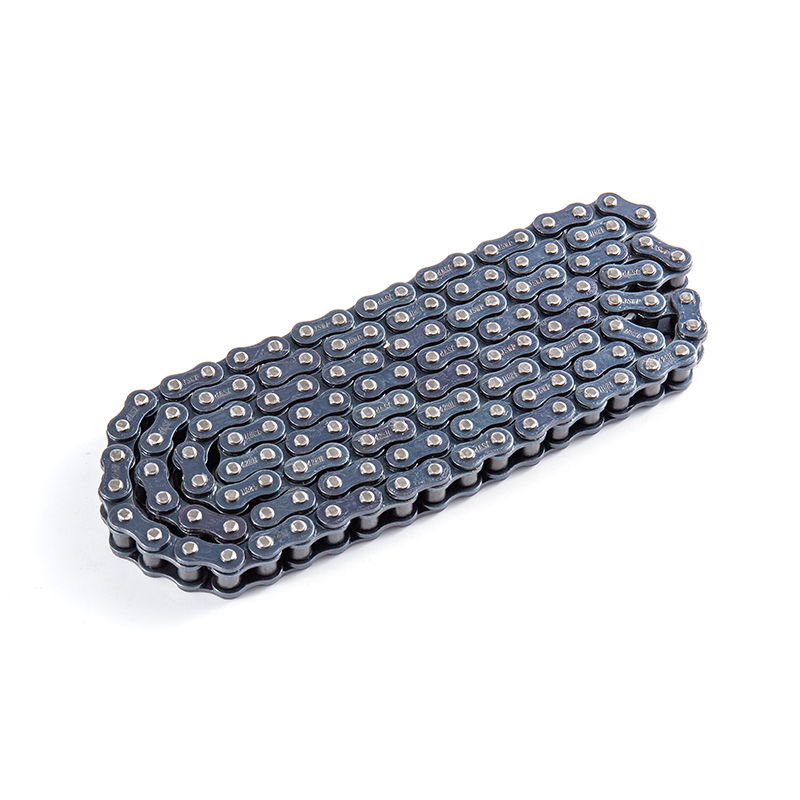
How Can Buyers Evaluate a Wholesale Motorcycle Chain Supplier
Supplier evaluation should begin with the ability to communicate product requirements clearly. A supplier may offer several chain sizes, but that alone does not tell a buyer whether the supplier can handle a particular purchasing arrangement consistently.
A distributor can look at several practical areas:
- Whether product specifications are presented clearly.
- Whether samples can be reviewed before a larger order.
- Whether different sizes can be identified separately.
- Whether packaging requirements can be discussed in advance.
- Whether product information remains consistent during communication.
- Whether questions about compatibility receive clear answers.
A supplier that provides unclear product descriptions can create additional work for the distributor, especially when several similar products are being purchased together.
For buyers sourcing a Wholesale Motorcycle Chain, communication should cover the complete product requirement rather than only the requested quantity. Size, construction, matching information, packaging, and intended application should be discussed as part of the same purchasing process.
This approach also makes later comparisons easier. When several suppliers are being considered, buyers can compare responses based on the same requirements instead of comparing incomplete descriptions.
Which Factors Should Be Compared in Motorcycle Chain Quotes
Price is only one part of a quotation. Two offers may appear similar while covering different product specifications or packaging arrangements. A useful comparison requires the buyer to confirm what each quotation actually includes.
Product requirements should remain consistent when different quotations are compared. Otherwise, a lower quoted amount may simply reflect differences in product construction, packaging, order conditions, or other requirements.
| Quotation point | What to clarify |
|---|---|
| Product specification | Confirm the exact chain being quoted |
| Construction | Check whether the product type is the same |
| Packaging | Confirm individual and outer packaging requirements |
| Order conditions | Check whether the purchasing conditions are comparable |
| Matching information | Confirm compatible sprocket details |
| Custom requirements | Clarify whether special requests are included |
For a Wholesale Motorcycle Chain order, buyers should also check whether product labeling corresponds with the quotation. Clear labeling can become important once several sizes are stored in the same warehouse.
A good comparison therefore asks a simple question: are the quotations describing the same product and the same purchasing conditions? If not, comparing the quoted amounts alone can give a misleading impression.
How Should Motorcycle Chain Samples Be Checked Before Bulk Delivery
Sample checking should connect directly with the requirements established during purchasing. Once a supplier has provided a sample, the distributor can compare it with the agreed product description and the requirements that will apply to the larger shipment.
The sample should be checked for the characteristics that matter to the intended application. This can include size, construction, movement between links, connection areas, visible surface condition, labeling, and packaging.
It is helpful to use the same checking approach for different samples. Consistency makes it easier to identify differences between products and prevents one sample from being judged by different criteria than another.
For Wholesale Motorcycle Chain purchasing, sample approval can also help reduce confusion when several sizes are ordered together. Each approved sample can serve as a physical reference for its corresponding product description.
If packaging is part of the order requirement, the sample packaging should also be reviewed. Labels need to make the product easy to identify after it enters the warehouse.
This stage provides a practical connection between purchasing and inventory management. Once the order arrives, warehouse staff can refer to the approved product description and sample characteristics when checking the shipment.
How Should Distributors Organize Different Motorcycle Chain Sizes
Once different products enter the warehouse, organization becomes the key issue. Similar-looking chains should not be stored without clear separation. A distributor may handle several sizes, construction types, and applications, so every product needs an identifiable place.
One useful approach is to divide storage according to size first and then separate products by construction or application. Labels can include the product size and compatible application so that staff do not have to rely on memory.
The same identification should appear across purchasing records, storage labels, sales information, and shipping documents. Consistent naming reduces the chance that one product is described differently in different parts of the business.
For a Wholesale Motorcycle Chain inventory, the following practices can make daily handling easier:
- Store different sizes in clearly separated locations.
- Keep similar products in labeled sections rather than mixed cartons.
- Check the label before picking an order.
- Confirm chain and sprocket compatibility before shipment.
- Keep returned products separate until their identity is confirmed.
- Review older stock before adding new products to the same location.
Inventory organization also affects customer communication. When a customer asks for a replacement chain, staff can use the recorded size and application information instead of relying only on visual comparison.
The result is a more consistent process from purchasing through storage and delivery. Managing different motorcycle chain sizes becomes less about memorizing product differences and more about maintaining clear product identification at each stage.





Copyright © Jiangshan Wangpai Chain Industry Co., Ltd. All Rights
Reserved
 Motorcycle Chain Manufacturer