 EN
EN

 中文简体
中文简体
How Does a Standard Motorcycle Chain Behave in Real Use
How Does a Standard Motorcycle Chain Behave in Real Use
How Does a Standard Motorcycle Chain Behave in Real Use
How Does a Standard Motorcycle Chain Behave in Real Use
How Does a Standard Motorcycle Chain Behave in Real Use
How Does a Standard Motorcycle Chain Behave in Real Use
How Does a Standard Motorcycle Chain Behave in Real Use
How Does a Standard Motorcycle Chain Behave in Real Use
How Does a Standard Motorcycle Chain Behave in Real Use
How Does a Standard Motorcycle Chain Behave in Real Use
How Does a Standard Motorcycle Chain Behave in Real Use
How Does a Standard Motorcycle Chain Behave in Real Use
How Does a Standard Motorcycle Chain Behave in Real Use
How Does a Standard Motorcycle Chain Behave in Real Use
How Does a Standard Motorcycle Chain Behave in Real Use
How Does a Standard Motorcycle Chain Behave in Real Use

How Does a Standard Motorcycle Chain Behave in Real Use
2026-07-03
A motorcycle chain system rarely works under stable conditions. Each rotation brings small changes in load, direction, and surface contact. Over time, these variations stack up and begin to shape how the transmission feels during operation.
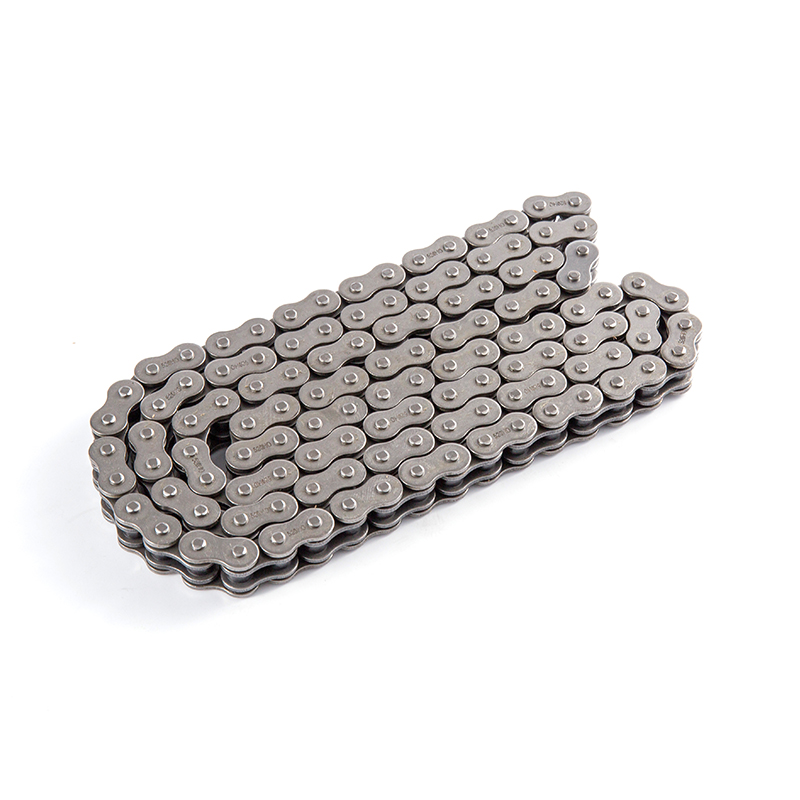
In practice, a Standard Motorcycle Chain is constantly shifting between tension and release states. The motion is not only forward transfer but also micro-adjustment between linked parts. Pins, bushings, and rollers are always reacting to force rather than holding a fixed position.
What matters here is not a single moment of operation, but the pattern that repeats across thousands of cycles. That pattern slowly defines how smooth or uneven the system feels when the motorcycle is in motion.
What Happens Inside a Chain During Real Riding Conditions and Why It Matters for a Standard Motorcycle Chain
Inside the chain, movement is layered rather than uniform. Each link does not simply follow the sprocket; it reacts to it.
When the chain enters contact with the sprocket, several small motions occur at the same time:
- the roller shifts slightly before locking into tooth contact
- internal pin rotation adjusts under load
- side plates guide direction without full rigidity
None of these actions are dramatic on their own, but together they form the mechanical behavior that riders eventually feel through vibration or smoothness.
A Standard Motorcycle Chain handles this by distributing force across multiple contact points instead of a single surface. Still, the balance is sensitive. If one joint resists movement more than others, the load redistributes unevenly, and that imbalance tends to repeat in every rotation.
It is not unusual for small friction differences inside one section of the chain to influence the overall feel of the entire loop.
How Chain Stretch Develops Over Time Without Visible Warning Signs
Chain elongation is often misunderstood as material stretching, but it behaves more like gradual spacing change inside the joints.
At the beginning, the difference is almost impossible to notice. The chain still sits normally on the sprocket, and movement feels consistent. Internally, however, the contact surfaces between pins and bushings begin to adjust.
Over time, this leads to subtle effects:
- engagement points shift slightly forward during rotation
- chain seating on sprocket teeth becomes less consistent
- motion timing feels slightly delayed under load changes
A Standard Motorcycle Chain does not fail in a single step. Instead, the internal spacing changes slowly, and the system adapts around it until the difference becomes noticeable in engagement behavior rather than appearance.
There is a simple way technicians often describe it: the chain still looks aligned, but it behaves as if it is no longer matching the sprocket rhythm perfectly.
What Riders Often Miss About Chain Tension and Its Real Mechanical Impact on a Standard Motorcycle Chain
Tension is often judged visually, but mechanically it is closer to a force distribution setting than a simple tightness adjustment.
If tension is too high, the chain loses some of its ability to adapt to sprocket curvature. Movement becomes slightly restricted, and resistance increases at the contact points. If it is too loose, the chain begins to shift before engaging properly, creating irregular load transfer.
The interesting part is how these effects appear over time rather than immediately.
A Standard Motorcycle Chain reacts to tension imbalance in ways that are not always obvious at first:
- load concentrates on fewer links than expected
- contact timing becomes inconsistent during rotation
- small vibrations appear under changing speed
In many cases, the system still works normally, but the mechanical “feel” changes gradually enough that it is often attributed to general wear instead of tension behavior.
How Sprocket Alignment Influences Chain Wear Patterns in Daily Use
Alignment is less about geometry on paper and more about how force travels through contact points in motion.
When sprockets are not perfectly aligned, even slightly, the chain is forced to compensate during every rotation. This does not stop operation, but it changes how pressure spreads across the links.
A Standard Motorcycle Chain under imperfect alignment tends to show subtle directional wear patterns:
| Observation area | What may appear in use |
|---|---|
| Side of links | Uneven polishing on one edge over time |
| Sprocket surface | Contact marks not evenly distributed |
| Chain movement | Slight side drift during rotation |
| Acoustic feedback | Small variation in rolling sound |
These changes develop slowly. At first, they are almost indistinguishable from normal operation noise. Only after repeated cycles does the pattern become more consistent.
What makes alignment important is not immediate failure, but the way it quietly shapes wear direction. Once wear starts leaning to one side, it tends to continue in that direction unless corrected.
Which Riding Conditions Change Chain Lifespan More Than Expected for a Standard Motorcycle Chain
Not every riding environment affects a chain in the same way, even if the distance traveled looks similar on paper. What matters more is how often the load shifts and how stable the contact conditions remain during movement.
A Standard Motorcycle Chain tends to react more noticeably to repeated small changes rather than single heavy load moments. The difference shows up gradually, usually in how smoothly the chain maintains engagement over time.
Some conditions introduce more variation than others:
- frequent stop and go motion increases repeated load transitions
- uneven surfaces introduce small oscillations in chain tension
- long steady movement can still create wear if lubrication becomes inconsistent
In practice, the chain does not respond immediately to these factors. The effect accumulates slowly, often becoming noticeable only when engagement feel starts to change slightly during rotation.
The key point is not intensity alone, but repetition of micro changes in force direction.
How Lubrication Film Works Between Metal Surfaces Under Load in a Standard Motorcycle Chain
Lubrication inside a chain system is less about coverage and more about separation between contact surfaces. When the chain is moving under load, metal parts are constantly trying to come into contact, and the lubricant layer sits between them as a buffer.
In a Standard Motorcycle Chain, this film behaves differently depending on pressure and motion speed. It is not a fixed layer; it shifts, compresses, and redistributes during operation.
At the contact point:
- the film is compressed as the roller meets the sprocket
- it spreads slightly along the surface under rotation
- it reforms when the contact point shifts away
This cycle repeats continuously. If the film becomes inconsistent, direct metal interaction increases, which gradually changes the smoothness of movement.
| Condition | Lubrication behavior | Mechanical effect |
|---|---|---|
| Stable motion | film remains continuous | smoother rotation feel |
| frequent load change | film compresses and reforms often | slight variation in resistance |
| low lubrication state | film breaks in small areas | increased surface contact |
The system does not fail immediately when the film weakens. Instead, it begins to feel less consistent in motion response, especially during transitions.
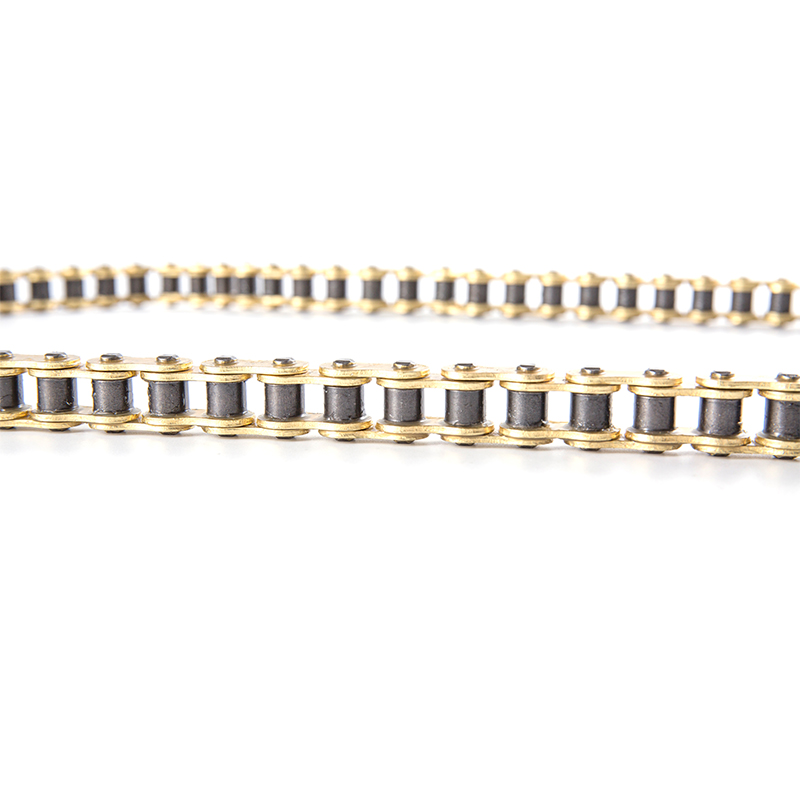
Why Chain Noise Develops and What It Indicates About Internal Wear
Noise from a chain system is not random. It usually reflects how contact surfaces are interacting at a very small scale. When everything is aligned and lubricated evenly, sound tends to remain steady. Once conditions change, variations begin to appear.
A Standard Motorcycle Chain can produce different types of sound depending on where the change is happening internally.
Noise often comes from:
- slight friction changes between pin and bushing contact
- uneven seating on sprocket teeth during rotation
- small alignment shifts that affect rolling rhythm
These are not sudden changes. They usually develop step by step, and the sound tends to follow the same pattern.
There is also a practical observation pattern often used in maintenance environments:
- early stage: sound remains steady but slightly textured
- middle stage: variation appears during acceleration or release
- later stage: sound becomes more noticeable under load change
The sound itself does not define the issue, but it often reflects where internal friction is becoming less uniform. In many cases, noise is simply the first signal that something inside the system is no longer moving in a fully consistent way.
What Factors Influence Chain Selection for Different Motorcycle Setups Using a Standard Motorcycle Chain
Chain selection is rarely based on a single parameter. It is usually the result of matching multiple mechanical conditions within the transmission system. Even small differences in setup can shift how the chain behaves during operation.
A Standard Motorcycle Chain is typically chosen by considering how load, motion pattern, and system geometry interact together rather than independently.
Key factors usually include:
- type of load transfer during acceleration and deceleration
- alignment characteristics between driving and driven components
- frequency of speed change during typical use
These elements affect how force moves through the chain system and how evenly that force is distributed across links.
Another way to view selection is through system balance rather than individual specification:
| Setup condition | Chain behavior focus |
|---|---|
| frequent load variation | flexibility in engagement |
| steady motion use | consistent rolling response |
| mixed conditions | balanced wear distribution |
The chain itself does not change, but its working environment defines how it behaves over time. Small differences in setup can lead to noticeable changes in movement feel, even when the chain appears identical from the outside.





Copyright © Jiangshan Wangpai Chain Industry Co., Ltd. All Rights
Reserved
 Motorcycle Chain Manufacturer